Showing posts with label ARCs. Show all posts

Tuesday, September 30, 2014

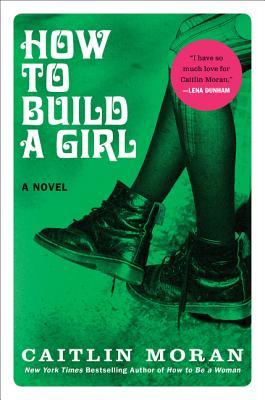
Review: How to Build a Girl by Caitlin Moran


20525628

352 pages, Published September 23rd 2014 by Harper

Caitlin Moran's debut novel How to Build a Girl is the story of fourteen-year-old Johanna Morrigan's reinvention and simultaneous coming of age in 1990s London. After suffering a huge embarrassment on local TV and making a slip-up that might cost her family their monthly benefits, Johanna decides to make some serious changes. She begins submitting music reviews to a London journal, discovers an all-black wardrobe, and falls in love with a rock star.

By seventeen, Johanna goes by her nom de plume, Dolly Wilde, and has become the quintessential rock journalist - she's a hard-drinking, poison-pen-wielding self-proclaimed Lady Sex Adventurer. Despite her success and adventuring, Johanna isn't quite happy living as Dolly Wilde. She no longer wants to write negative reviews of bands she hates, but to be positive about those that she likes. 

How to Build a Girl by Caitlin Moran is one of those rare books that can be described in one word: hilarious. If you're like me, then you won't just be chuckling to yourself during this book, you'll be full-on laughing out loud. I expected a pretty standard coming of age story, mostly drama, some thoughtful musings. Instead I got a hilarious story told by one of the most unique protagonists I can recall. Johanna is smart, witty, and blunt. She speaks candidly about the things teenage girls deal with, like masturbation, sex, and periods. Johanna's voices makes How to Build a Girl into a refreshing take on adolescence and making one's mark on the world. My only qualm with the the novel was that Johanna's "sex adventuring" got a bit repetitive after a few anecdotes. I have no problem with mentions of sex and the stories were, of course, still funny. But after several tales of Johanna's misadventuring with men, the stories became a little more bland and ran together.

How to Build a Girl reads like a hybrid of The Bell JarAlmost Famous, and Angus, Thongs, and Full-Frontal Snogging. With a sharp, funny narrator, Caitlin Moran provides a story that's relatable enough for readers to reflect on their own adolescences and how they eventually "built" themselves.

Rating: 4/5

**I received a free e-galley of How to Build a Girl from Edelweiss.

Thursday, September 11, 2014

Review: Dark Sparkler by Amber Tamblyn

128 pages, to be published on April 7, 2015 by HarperPerennial

Amber Tamblyn's third volume of poetry, Dark Sparkler, examines the lives of actresses who died before their time (sometimes long before their time). Tamblyn covers a wide range of actresses - from Sharon Tate to Marilyn Monroe, from Brittany Murphy to Peg Entwistle - and includes an epilogue of more personal poems about the "business." Interspersed with her poems are original pieces of artwork by the likes of Adrian Tomine, David Lynch, and Marilyn Manson.

I'm definitely a fan of poetry, but I had never read anything by Tamblyn before and I had no idea what to expect - would this be the work of a spoiled Hollywood actress trying to forge a bond with these former starlets? Simple, rhyming lines? Just plain bad? Luckily, my worries were completely unfounded. Dark Sparkler completely blew me away. Tamblyn has an immensely strong grasp of metaphor and uses it to her advantage. Her prose never stumbles and she never pulls punches in this complex and haunting collection. Each poem is a portrait of a woman's life - sometimes the portraits are expansive, sometimes they're simply a snapshot, but they are all breathtaking. This book is absolutely wonderful with artwork that perfectly matches the tone.

In the foreword to this volume, Diane di Prima suggests that readers first take in Dark Sparkler how they normally would: read it straight through, pick out poems here and there, whatever works. Then, she instructs us to follow our curiosities...look up the women whose stories we're unfamiliar with (or the ones we already know)! Read their biographies, look at their photos, find interviews, do anything that strikes our fancy. I took di Prima's advice, but only partially. I couldn't stand the thought of waiting to finish the book before I found out more about Taruni Sachdev or Rebecca Schaeffer or Bridgette Andersen. I wanted to know them the way Tamblyn seemed to in her verse. I wanted to understand these words and stories. Once I read about one of these actresses lives, then I'd reread the poem and see what new dimensions the backstory brought to the work. Of course, the poems in Dark Sparkler can stand on their own, but we don't necessarily have to leave them on their own. 

Favorites: 
"Sharon Tate," "Peg Entwistle," "Jean Harlow," "Bridgette Andersen," "Samantha Smith"

Rating: 4.5/5

**I received a free e-galley of Dark Sparkler from Edelweiss.

Monday, July 21, 2014

Review: Bad Feminist by Roxane Gay


Since the release of her widely acclaimed debut novel, An Untamed State, 2014 is shaping up to be the year of Roxane Gay. Next up is her collection of essays titled Bad Feminist, set to be released on August 5. I had the privilege of receiving an advanced e-galley of Bad Feminist and was incredibly impressed with the wide-reaching, profound material found in this collection.

Ms. Gay has separated her book into 5 equally riveting sections: Me, Gender & Sexuality, Race & Entertainment, Politics, Gender, & Race, and Back to Me.
As she explains in the "Me" essays, Roxane Gay is a self-proclaimed “bad feminist”: she believes heavily in the tenents of feminism, yet finds herself not quite able to give up certain behaviors and habits. She advocates for gender equality, but still enjoys listening to rap music with not-so-suitable-to-feminist-ears lyrics. She promotes a culture with positive representations of various races, ethnicities, and genders, yet waxes nostalgic for the whitewashed Sweet Valley series. It’s a conundrum that most modern feminists face and must come to terms with: do I disown things that I enjoy if they don’t align perfectly with my beliefs? Am I “bad” if I don’t loudly protest against every problematic situation I encounter? Maybe so. But maybe we can stake a claim in being bad feminists as Gay has.

From her "bad feminist" manifesto, Roxane leads into an acknowledgment of her own privilege, commenting that, "At some point, you have to surrender to the kinds of privilege you hold. Nearly everyone, particularly in the developed world, has something someone else doesn't, something someone else years for." Gay never forgets her privilege, but she also knows where she isn't privileged: as a black woman of Haitian descent she discusses the problems faced by women and people of color in our society, often focusing on their depictions in popular media. 

Ms. Gay's pop cultural commentary is funny and relevant, touching on subjects that still ring in recent memory. The "Gender & Sexuality" section of the book includes commentary on Girls, Bridesmaids, Girlfriends, the Sweet Valley book series, Kate Zambreno's novel Green Girl, VH1's "celebreality" shows Rock of Love and Flavor of Love, Gillian Flynn's Gone Girl, the Fifty Shades of Grey series, and many more. Gay uses these cultural milestones to discuss the portrayal of women in books, television, and movies, the expectations placed on women because of these portrayals, and the distorted mirror of popular culture through which women begin to see themselves. Her words are heavy, reminding us constantly of the ways women are forced to perform their gender and the barrage of unrealistic or problematic depictions of women in media. 


Similarly, "Race & Entertainment" is comprised of Gay's thoughts and personal experiences with race in film and television. She specifically addresses the popular "magical negro" trope, the supersaturation of media with struggle narratives, and the assumption that positive depictions of people of color here and there - "scraps from the table" as Gay calls them - will ever be enough. Sometimes Gay's prose is lovely, sometimes it's hard hitting, but it always leaves the reader with new information, and new perspective, and ultimately, the desire for more.  

The penultimate section of Gay's book is "Politics, Gender & Race" with essays ranging from women's reproductive freedom as a political bargaining chip to the media's treatment of Dzhokhar Tsarnaev following the Boston bombing. These criticisms are brash and fierce, forcing open the eyes of those who may not have considered such topics with a critical lens. 


Gay's final essays are "Bad Feminist: Take One" and "Bad Feminist: Take Two" in the "Back to Me" portion of the book. They tackle the concept of "bad feminist" in more depth, discussing the danger of subscribing to an "essential feminism," a feminism that is black or white, right or wrong, and as Gay notes, "suggests anger, humorlessness, militancy, unwavering principles, and a prescribed set of rules for how to be a proper feminist woman." We all mess up. There are no perfect movements and no perfect feminists, so we might as well admit to our flaws and embrace our bad sides.


Roxane Gay's Bad Feminist is a collection of poignant and thought-provoking essays; she never hesitates, never pulls punches, and we readers are all the better for it. Every page is a wonder, every sentence a revelation. Now that I've finished Gay's essays and have had a few days to ruminate on them, I feel wide-eyed and ready to take on the world. And I am proud to call myself a bad feminist. 
Rating: 5/5
**I received a free e-galley of Bad Feminist from Edelweiss.

Thursday, September 26, 2013

Review: Bandette by Paul Tobin


144 pages, will be published on November 19, 2013 by Dark Horse Comics


It’s difficult to describe Bandette without using the word “charming” over and over. But I’ll say it: this is a truly charming graphic novel. Our titular character, Bandette, is the self-proclaimed “most talented thief this world has ever known.” With glee and wit, the teen crusader steals from those she deems worthy of being thieved: weapons dealers, shady underground organizations, and various other “bad guys.” Bandette is rarely alone in her adventures; she has a trusty pool of peers ready and willing to bail her out when sticky situations arise: a ragtag gang of street urchins, a trio of ballet dancers, and the adorable Thai food deliverer, Daniel. Luckily for this group, Bandette gets herself into sticky situations very frequently.


Although she’s on Inspector B. D. Belgique’s speed dial when the Parisian police just can’t finish a job without her, Bandette isn’t the only thief in France. Her greatest rival is Monsieur, a classic gentleman whose front is running a rare book and coin shop - his two greatest interests. Much to Bandette’s chagrin, Monsieur has beaten her to a steal several times. Unfortunately, it’s not all fun and games for Bandette. Okay, it’s mostly fun and games. But when Monsieur requests a midnight meeting with Bandette, it’s not to discuss thieving techniques. It’s to alert her that she has been targeted by the mysterious criminal group Finis whose leader, Absinthe, will not stop until Bandette is dead. Bandette’s life is in real danger and the first of Finis’s assassins is on their way…

I found myself smiling a lot as I read Bandette. It’s a truly delightful volume with bright, colorful illustrations and memorable characters. I loved diving into a world where knockout spray comes in a can, enemies have lengthy chats while fighting (which gives a pleasant Princess Bride vibe), and our heroine is more concerned with finding chocolate bars than the criminal mastermind who wants her dead. This volume collects the first five issues of Bandette. Additionally, he back matter includes several “Urchin Stories” - minicomics centering on the smaller characters featured in volume one of Bandette. The reader is also treated to a short story from Daniel’s perspective. I thoroughly enjoyed reading Bandette and I look forward to experiencing more of the teen thief’s gleeful adventures in the future.

Rating: 4.5/5

**I received an ARC of Bandette through NetGalley

Monday, September 2, 2013

Review: If You Could Be Mine by Sara Farizan

256 pages, published on August 20, 2013 by Algonquin Young Readers
Sahar has been in love with Nasrin for as long as she can remember. But the hidden romance they’ve shared in Iran is on the verge of destruction when Nasrin’s parents arrange for her to marry a handsome doctor. No one knows that the girls’ relationship is anything but a close friendship, but Sahar can’t stand the thought of Nasrin being with someone else. She thinks she has found a solution to their dilemma when she meets Parveen, a post-op transsexual. While homosexuality is considered a sin, sex changes are accepted and often encouraged by Iran’s government. Convinced that this is the only way to be with Nasrin and stop her wedding, Sahar begins attending support group meetings with transsexuals, both male and female. As Nasrin’s wedding date draws nearer, Sahar becomes desperate to begin the process of her sex reassignment, attempting to acquire hormones illegally and setting up a session with a surgeon. Of course, desperation rarely allows for things to go as planned and Sahar is predictably left where she started.
It was fascinating to read about everyday life in Iran, especially through the eyes of a young woman who is knowingly breaking the law. A love story between two young women is also rare and refreshing. But aside from the social commentary, I found If You Could Be Mine almost unreadable. Sara Farizan’s two lovers are so unlikable that it’s hard to understand how anyone could possibly fall in love with them. Writers should show rather than tell their audience the message they want to share. But the reader has Sahar simply telling us over and over how much she loves Nasrin without giving us much of a reason to believe their relationship. Most of her narration is spent lamenting how spoiled, rude, and bossy Nasrin can be. What we see of Nasrin confirms this; she seems to enjoy stringing Sahar along like a pet, always available at her beck and call. While Nasrin whispers a few “I love you”s to Sahar throughout the novel, she never even mentions finding a way to be together. Without being inside her head, we see only surface emotions from Nasrin, and it’s simply not enough to believe their relationship.
Surprisingly, I ended up disliking Sahar even more than her selfish counterpart. Sahar may only be seventeen years old, but she is certainly old enough to understand that undergoing a major operation such as sex reassignment is not something that can be done on a whim. She seems to think that it’s akin to visiting her dentist, a quick trip that will magically solve all of her problems. She doesn’t even consider the fact that the people who have this operation feel that they have no other choice, that they were actually born in the wrong body. Sahar may not be able to love Nasrin in public, but she is comfortable in her body, never doubting that she is meant to be a woman. It becomes offensive how little she respects the struggles of transsexuals. Sahar completely disregards the thoughts and feelings of those in her support group – people who have actually struggled with gender identity for their entire lives. Instead, she complains about them sharing emotions when all she wants is to find out how to start taking hormones. It’s only when she meets with a surgeon (and sees Nasrin’s doctor fiancĂ© at the clinic) that she begins to understand the magnitude of what she plans to do. As the surgeon explains in graphic detail what the surgery entails, Sahar faints, and in turn finally comes to her senses about the operation. 
I appreciate Farizan’s effort to illuminate the struggles of two women in love, especially in a culture that is largely unfamiliar to western readers. Fiction can be a great vehicle for sharing views and information about topics that are traditionally taboo. However, the message of this story  was overshadowed by Sahar’s naivety and Nasrin’s selfishness. The more I read of If You Could BeMine, the more desperate I was to be done with it. Unsympathetic characters are unfortunately complemented by stilted dialogue that pushes the story to a sad and messy conclusion.
Rating: 1.5/5
**I received an ARC of this book from NetGalley.

Review: Bad Houses by Sara Ryan

image
160 pages, will be published on November 12, 2013 by Dark Horse Comics
Teenager Anne Cole is a photographer, fascinated by abandoned spaces and things left behind. Lewis works with his mother managing estate sales in the small town of Failin, Oregon. When Anne tries to explore the left behind items at an estate sale, she and Lewis click instantly. But Bad Houses extends much further than a teenage love story as Anne and Lewis struggle with family and identity in their economically failing town. Anne’s mother, Danica, and Lewis’s mother, Cat, add their own unique storylines to Bad Houses, with their relationships to Lewis and Anne taking center stage.
Bad Houses is, above all, about the connections between people who love each other and the objects that fill their lives. Danica is a hoarder, filling her home with an endless stream of random objects to which she assigns profound meaning. Anne is intrigued by what people leave behind and experiments with shoplifting, curious if she’ll feel the “thrill” of stealing what doesn’t belong to her. Cat feels most comfortable when she’s ordering other people’s belongings into a display that will appeal to customers. And Lewis is almost an object himself, constantly being controlled by his mother and desperate to escape.
I enjoyed Bad Houses more than I first anticipated. I’ll admit that I was thrown a bit by the cover of Bad Houses. I really liked Carla Speed McNeil’s illustrations, but the coloring on the cover seemed a bit too bright and cartoonish. I think McNeil’s work translates better in black and white, especially given the tone of this story. Once I got past the cover and started reading, I found a compelling study of family, love, and the power we give to the things in our lives. But Bad Housesisn’t without faults. Lewis’s character is sadly underdeveloped, aside from a weak storyline about his absent father. The flashback sequence seemed unnecessary, throwing together Cat, Lewis’s father, and the town’s grouchy antique store owner, Fred, for a few scenes from high school. And Danica’s boyfriend AJ, along with his pill pushing business, didn’t add much to the story. Even with these weaknesses, Sara Ryan has created characters that are real, flawed individuals, capable of tugging at the heartstrings of the reader. We can’t always admit to our own struggles – with both people and objects – but it’s easy to see ourselves in any one of Ryan’s characters.
Rating: 4/5
**I received on ARC of Bad Houses through NetGalley.

Tuesday, July 23, 2013

Review: Night Film by Marisha Pessl

624 pages, will be published on August 20th 2013 by Random House
When the 24-year-old daughter of infamous horror film director Stanislas Cordova is found dead in an elevator shaft, the police immediately rule her death a suicide. But investigative reporter Scott McGrath, who briefly tangled with Cordova several years earlier, is certain that there’s more to the story. Teaming up with two rookies - Nora, the coat-check girl who saw Ashley Cordova days before her death and Hopper, a quiet drug dealer who received a mysterious package from Ashley - McGrath begins to unravel Ashley’s twisted past and in turn, the horrifying history of Cordova himself. But every loose end that McGrath manages to tie seems to work itself free, leaving new questions and startling conclusions in its wake. As he dives further into the Cordova family’s past, a sinister place populated with curses, black magic, and death, paranoia sinks in and McGrath begins to think that he is being targeted by Cordova himself.
Scott McGrath is a likeable character, although his quest for the “truth” does cloud his judgment in both his personal and professional lives. I found myself raising my eyebrow a few times as he blatantly put himself and his family in danger and his already tarnished reputation on the line. His relationships with Nora and Hopper are endearing, yet somewhat unrealistic. I can’t imagine a veteran reporter actually allowing two inexperienced strangers, decades younger than himself, ride shotgun on perhaps the most important investigation of his life. But for the most part, their dynamic works: Nora’s innocence, Scott’s determination, and Hopper’s secret motivations blend together to form a perfect storm of investigative prowess. 
In a nod to post-modernism and perhaps to create a more visual reading experience, several sections of the book are scans from articles about Ashley and her father, screenshots of webpages, newspaper clippings, and photographs. Most of this worked well for the book by giving the reader a sense of involvement with the story, as if we, too, were reading the hidden Cordova message boards and magazine articles along with McGrath. But I could have done without the few photos of Ashley herself, as I would have liked to create my own image of her. I imagine these photos were included, again, to create the feeling that Ashley’s story is grounded in reality and add a greater sense of urgency to the novel. 
With Night Film, Marisha Pessl has crafted a literary thrill ride that will leave readers turning pages deep into the night. I myself began to feel tied up in Cordova’s complex world the longer that I read. My imagination got the best of me a few times after the lights had gone out. And more than once as Scott McGrath gave brief synopses of Cordova’s films, my first reaction was skip over those sections because I didn’t want his films to be spoiled for me before I got to see them. Unfortunately for us, Cordova exists only in the excellent Night Film, as do his films, his fans, and his family.
**I received this book for free through the Goodreads first reads program.
Rating: 4.5/5